Healthy Territories: a week to reflect on the links between the environment and health
From March 31 to April 4, 2025, Montpellier hosted the "Territoires en Santés" Spring School, a scientific event in collaboration with local stakeholders organized as part of the Anthropocene Campus.
This week of exchanges, training, and field exploration brought together doctoral students, researchers, professionals in the fields of environment, health, and humanities and social sciences, as well as actors from civil society and local authorities, around a common goal: to better understand the interconnections between human health, ecosystems, and territorial dynamics.
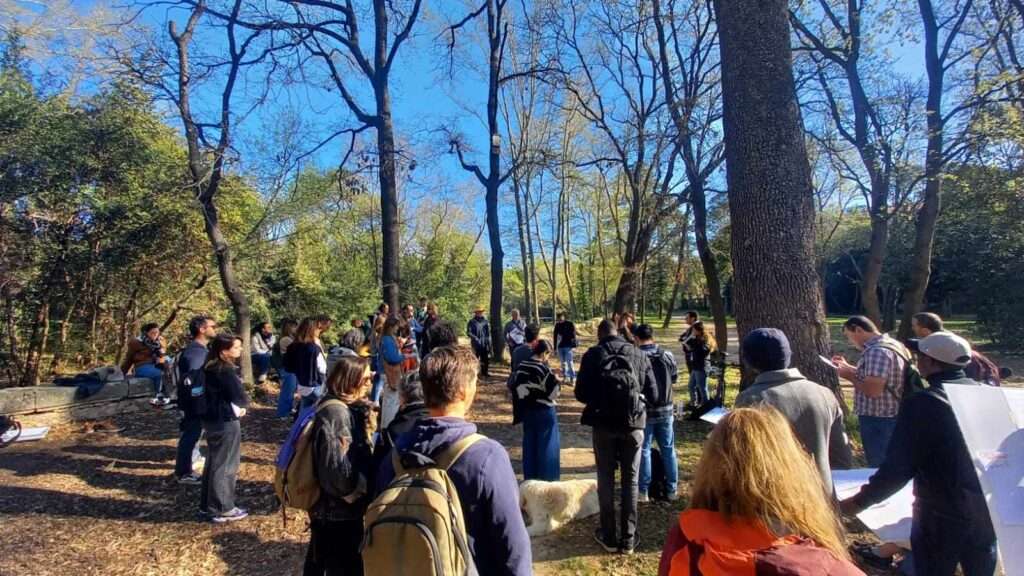
Designed as a space for training and co-construction of knowledge, the Spring School offered conferences, workshops, exploratory walks, and collective presentations, allowing for the exchange of scientific perspectives, field expertise, and emotions linked to a territory.
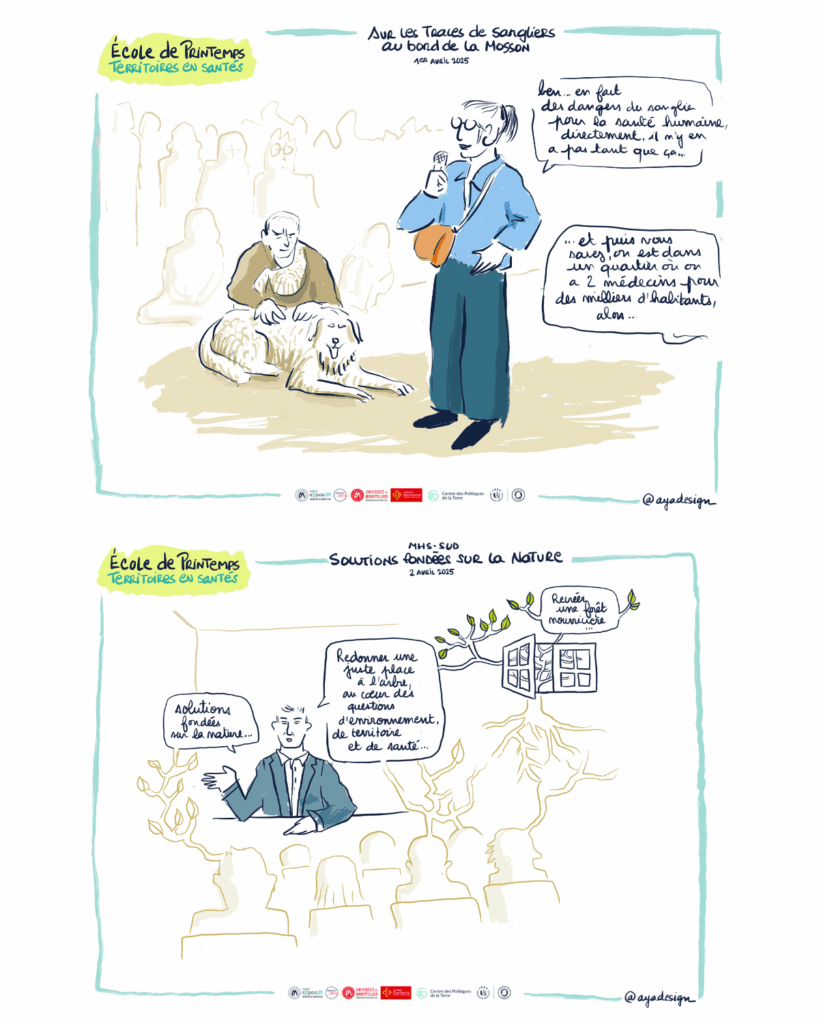
The approach adopted draws on the theoretical frameworks of the exposome, One Health, and nature-based solutions, applying them to the local realities and concrete tensions affecting the Montpellier area: growing urbanization, climate change, and biodiversity loss.
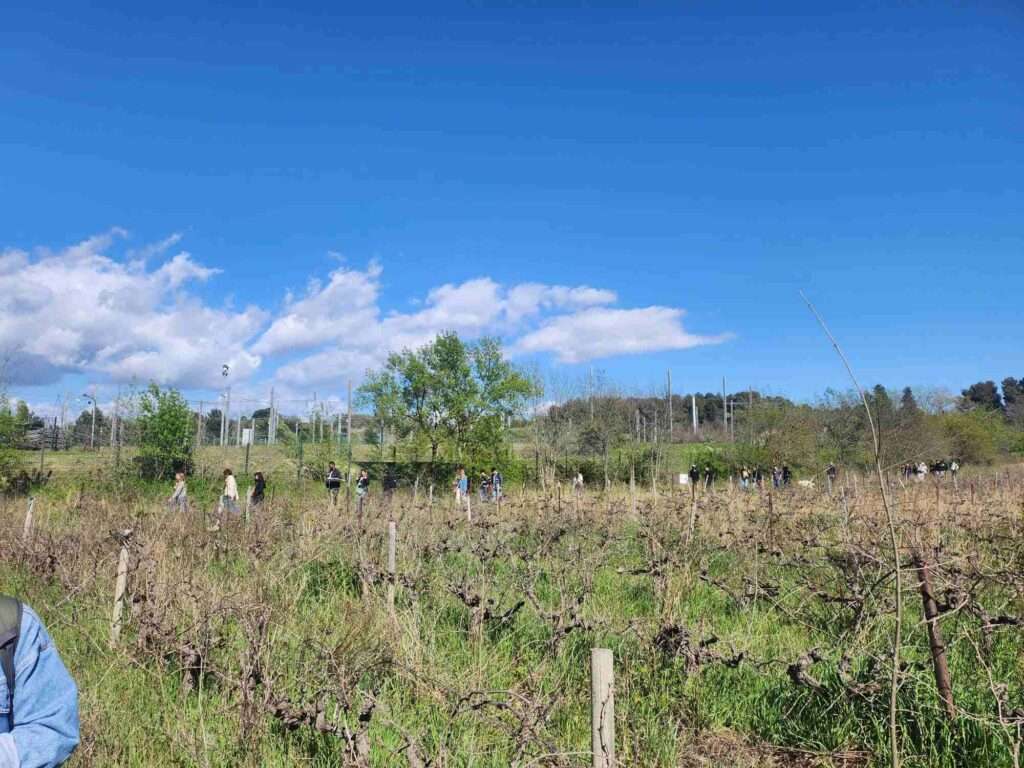
The field sessions were one of the highlights of the week. They illustrated environmental and health issues based on real-life situations in the Montpellier metropolitan area.
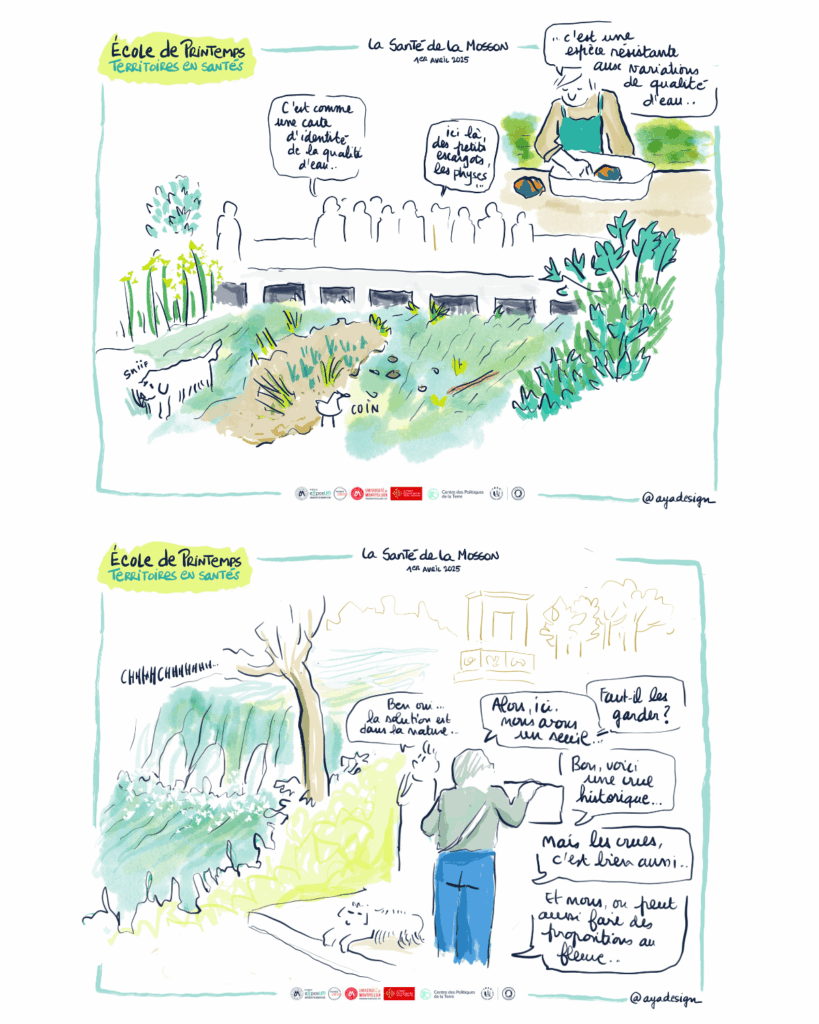
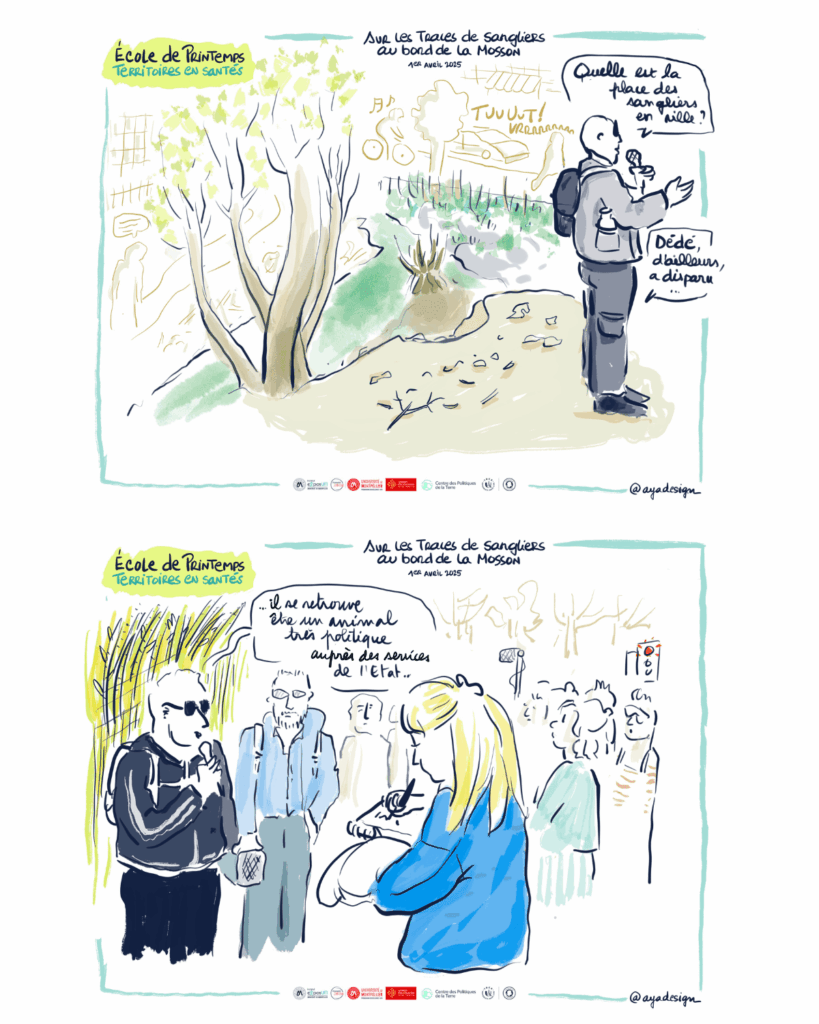
Tuesday: La Mosson, between water management and urban wildlife
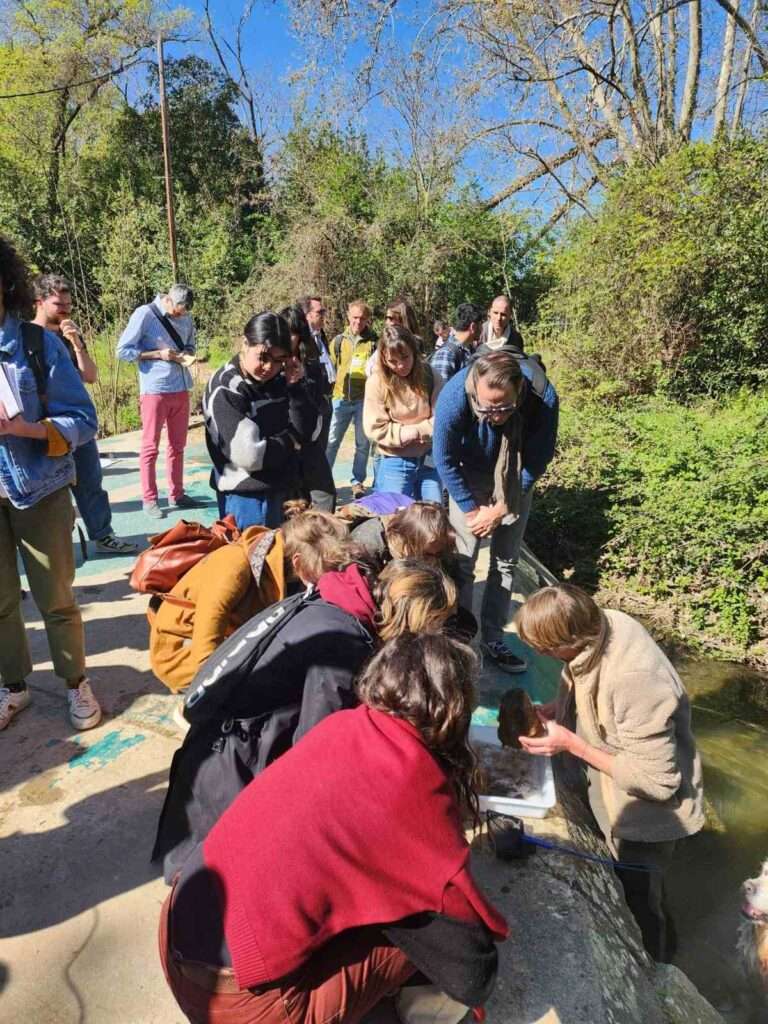
A two-part exploration of the Mosson River introduced participants to issues surrounding water quality, aquatic biodiversity, and coexistence between humans and wildlife in urban environments.
- Health of the Mosson: how can we assess the ecological status of a watercourse? How do local residents perceive it? What public policies are in place to protect it?
- Presence of wild boars in the city: this walk raised questions about wildlife management, perceptions of "wildlife" in urban areas, and their health and social impacts.
Wednesday: The Lez, biodiversity, and urban tensions
The second day in the field focused on the Lez River, combining nature exploration with discussions on urban greening and invasive species.
- The ecological quality of the Lez, restoration initiatives, and the use of the river as a public space were discussed with managers and scientists.
- Health issues related to greening, such as the proliferation of mosquitoes.
- Particular attention was paid to the presence of nutria, an invasive species.
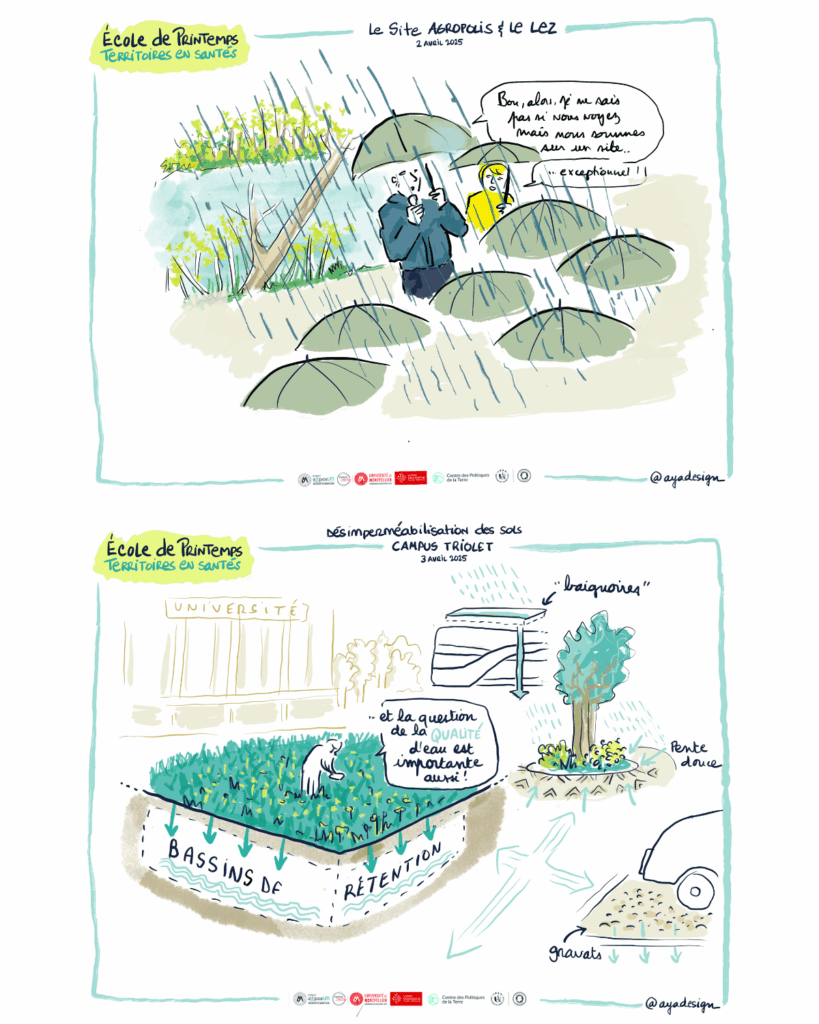
Thursday: Pollution, infrastructure, and water governance
Thursday's session explored the issue of water pollution and its governance in greater depth through:
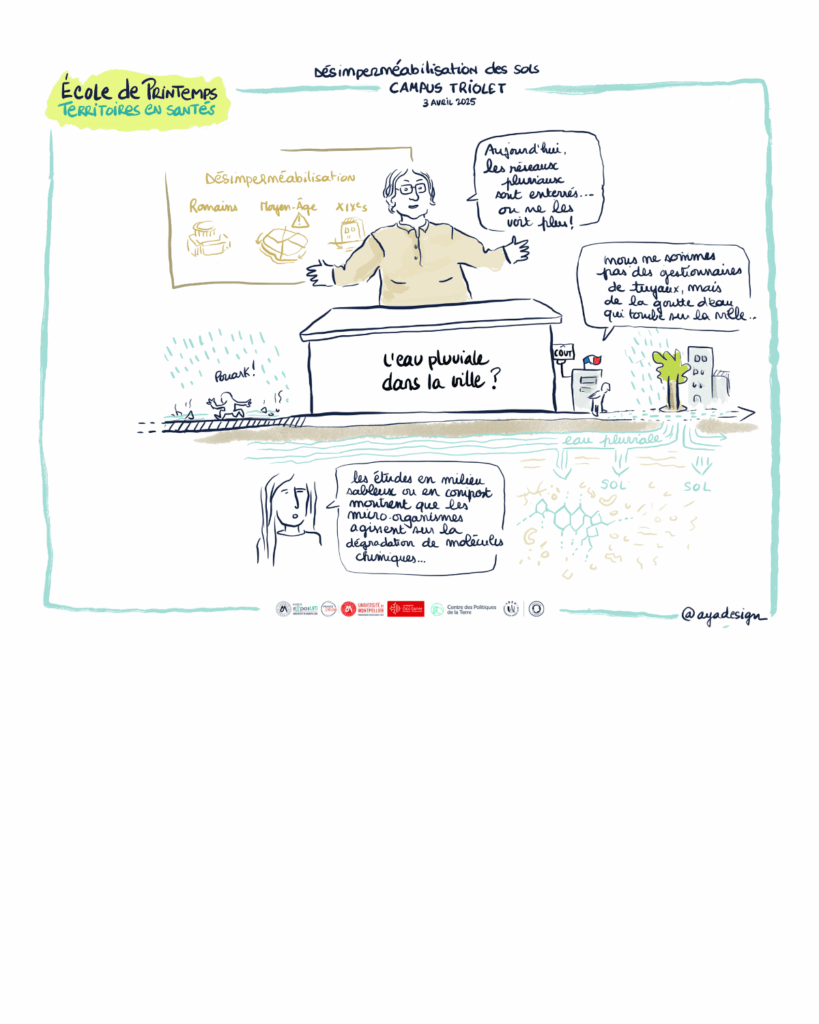
- A tour of experimental de-impermeabilization sites, addressing the reduction of pollutants through the transformation of urban soils.
- A meeting with the Régie des Eaux (water authority) to gain a better understanding of drinking water production systems and the challenges of governance and transparency in a context of climate change and pressure on resources.
Friday: Summary and outlook
The week ended with a collective feedback session in the morning, where participants were able to present what they had learned over the course of the various days, discuss the tensions between ecological objectives and social constraints, and identify courses of action for their own research or intervention work.
The "Territoires en Santés" Spring School has helped to establish an interdisciplinary and collective approach, integrating social sciences, ecology, public health, and urban planning.
This plurality of approaches has fostered a better understanding of the complex interactions between living environments, public policies, and social dynamics.
The strong involvement of institutional, associative, and scientific actors in the region gave the event a concrete, grounded dimension that was resolutely focused on transformation.
This week's event would not have been possible without the involvement of many individuals and organizations: A big thank you to the speakers for the quality of their contributions, to the participants for their commitment throughout the week, and to the scientific, institutional, and associative partners who provided their expertise and logistical support.
This school was organized and funded by the Idex Paris-Cité Earth Policy Center and the ExposUM Institute of the University of Montpellier and its partners, in collaboration with the city and metropolitan area of Montpellier. It would not have been possible without the participation of numerous actors in the field. It is the fifth edition of the Anthropocene Campus organized each year by the Earth Policy Center.
This school is one step among others in developing and implementing One Health approaches in Montpellier and the Occitanie region. We are currently working on ways to share what we have learned, including through an exhibition, so that we can continue to build on what has been learned and produced during this week.
Click here to view the program for this summer school.
Videos: Healthy Territory
The "Healthy Territories" Spring School, a scientific event organized as part of the Anthropocene Campus in collaboration with local stakeholders, was a highlight of exchanges, collective explorations, and reflections on the health of territories.
To convey the richness of this experience, several formats were produced: illustrations capturing key moments of the week, as well as two complementary videos.
The first video is entirely devoted to the Spring School. It recounts the course of the event, its objectives, notable contributions, and moments of co-construction. Through participant testimonials and footage filmed on site, it offers an immersive look at the heart of this experimental approach.
https://www.canal-u.tv/chaines/msh-sud/ecole-de-printemps-territoire-en-santes
The second video offers a more sensitive and immersive approach. It takes the form of a poetic capsule inviting viewers to discover the dynamics at work in Montpellier and immerse themselves in reflections on the implementation of "One Health" approaches. Through contemplative and evocative narration, it allows viewers to feel the spirit of the region, its challenges, and the connections between human, animal, and environmental health.
https://www.canal-u.tv/chaines/msh-sud/montpellier-territoire-en-santes
Illustration by Aya Berteaud – ayadesign: