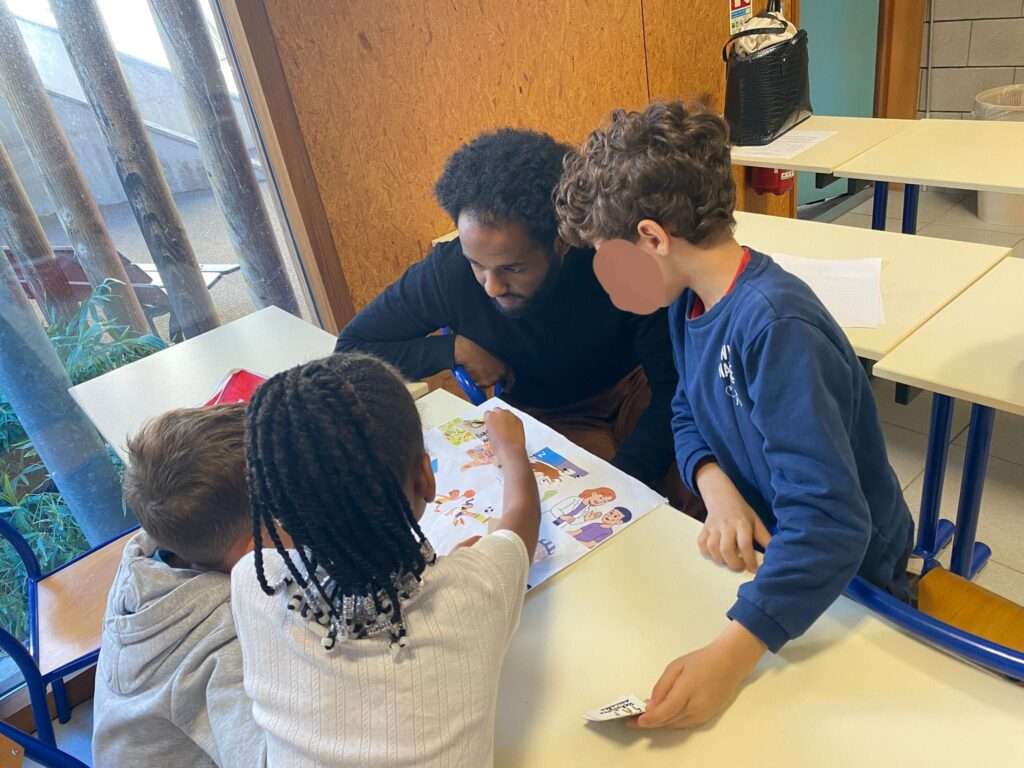
Interfaces Division
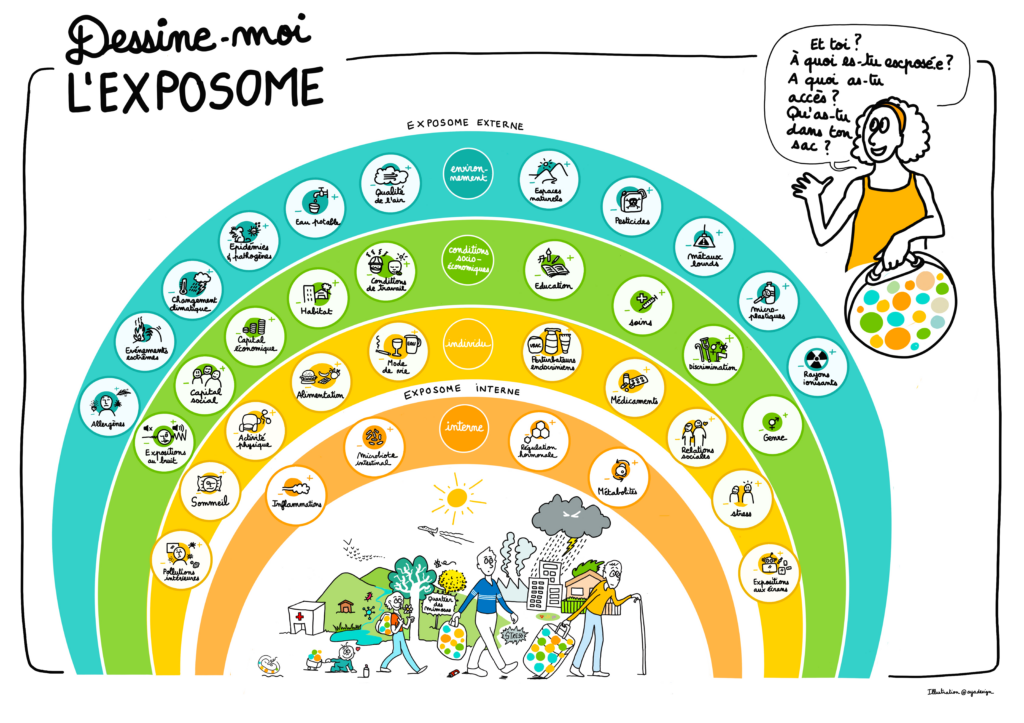
What is the exposome?
The exposome refers to the totality of an individual’s lifetime exposures to environmental and social factors that influence an individual’s health, as well as the onset, progression, and severity of infectious and noncommunicable diseases in humans. In this sense, the exposome is the environmental counterpart to the genome.
Thus, research on the exposome can just as easily focus on environmental pollution, water, air, or soil quality, vector-borne diseases, access to healthcare, patterns of settlement, health inequalities, public health policies, and so on…
Introduction to the Interfaces Research Area and the Team
The “Interfaces” research area at the ExposUM Institute aims to foster a culture of promoting research findings at the interface between science and society.
Thus, at the academic level, the Interfaces research area aims to strengthen a broad interdisciplinary approach centered on the exposome by fostering opportunities for dialogue among the social sciences (sociology, anthropology, geography, etc.), the medical and environmental sciences, the engineering sciences, and so on.
In addition, the “Interfaces” initiative aims to strengthen collaborations between researchers in the academic community in Occitanie, civil society (associations, NGOs, producer groups, patient associations, SCOOP) and public sector actors (Regional Health Agencies [ARS], elected officials and staff of the metropolitan area, the Occitanie region, and local governments) through transdisciplinary initiatives, by identifying and supporting synergies with other health/environment initiatives involving academic, public, and nonprofit actors.
The Interfaces research cluster’s team grounds its activities in regional approaches, fostering new collaborations between public and academic stakeholders while engaging civil society—for example, by creating new spaces for interaction between science and decision-making and by translating societal demands into research priorities.
The Interfaces research group is based at the Maison des Sciences des Humanités SUD (MSH SUD, CNRS-UM-UPVM Support and Research Unit 2035) and draws on its resources, including general services and administration, the imaging center, the science-society platform, and more.
The activities carried out under the “Interfaces” research area are conducted in close collaboration with stakeholders involved in the Occitanie Region’s RIVOC Key Challenge, particularly through the V2MOC project, which aims to better understand vector-borne infectious risks in the context of urban greening initiatives in the metropolitan areas of Montpellier and Toulouse, in collaboration with the MAK’IT (Montpellier Advanced Knowledge Institute on Transitions) Institute for Advanced Studies at the University of Montpellier, the ImpresS (Impact of Research in the South) team at CIRAD, and other research teams.
The Team
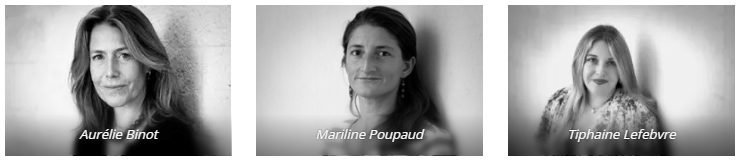
The Interfaces research area is overseen by Aurélie Binot *, science-society coordinator at CIRAD and a member of the ExposUM Executive Committee.
Tiphaine Lefebvre, Project Assistant for the Exposum Interface Pillar, was hired by the DPS and has been based at MSH SUD since September 2023.
Mariline Poupaud, Scientific Support Specialist, was hired by the DPS and has been based at MSH SUD since January 2024.
Finally, to support the team in its efforts to mentor and facilitate the cohort of winning ExposUM project leaders, Alexandre Guichardaz, a consultant in collaborative engagement, works with the team for 20% of his working time. Gilles Sarter, an independent sociologist, supports the team with sociological research.
* Aurélie Binot, who has joined MSH SUD as deputy director, is responsible for coordinating Research Area 2, “Science-Society Interfaces,” at the ExposUM Institute and is a member of the ExposUM Executive Committee; she has been appointed to these roles in her capacity as a CIRAD researcher recognized in this field. Within the framework of Research Area 2, the UM can draw on MSH SUD’s action research programs and the staff assigned to them; this UAR can thus carry out initiatives on behalf of the ExposUM Institute.
Activities Conducted as Part of the Interfaces Research Area
The activities of the “Interfaces” research area can be organized into four main areas:
- Support for the cohort of project leaders funded by the ExposUM Institute
- Promoting interdisciplinary or transdisciplinary initiatives arising from projects related to the exposome
- Facilitation of an ongoing seminar to stimulate interdisciplinary discussion on the exposome
- Support for interdisciplinary or transdisciplinary regional initiatives in the Occitanie region
1. Support for the ExposUM project leader cohort
The Interfaces initiative supports teams working on projects funded by ExposUM to promote—if deemed relevant by the project leaders—interdisciplinary and transdisciplinary processes within the projects, as well as to foster collaboration among project teams. This support is offered to all successful teams that wish to participate. In 2023, this represents 14 potential teams (7 research projects, 5 doctoral nexuses, 2 fellowships), to which will be added the winning teams from subsequent years.
Learn more about community engagement…
A variety of workshops and meetings are offered on a range of topics:
- Theme 1: Building Community
- Theme 2: Sharing Research Methodologies and Approaches in Global Health, One Health, and Health and the Environment
- Theme 3: Developing Skills in Interdisciplinary Practice
- Theme 4: Strengthening the Science-Policy-Society Link within Projects
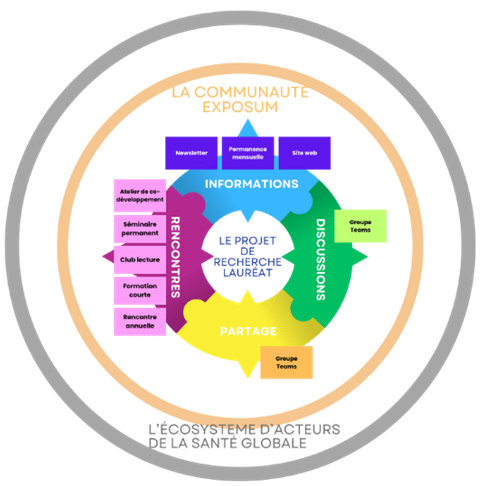
Various animation formats are available:
2. Support for interdisciplinary or transdisciplinary initiatives
Call for Expressions of Interest – 2026 Sessions
To promote transdisciplinary projects with a local impact and foster networking among researchers and civil society actors, the ExposUM Institute is offering a new support program for research teams within the I-Site community and their nonprofit partners, to highlight their research on topics related to the exposome, environmental health, or global health as they pertain to regional issues at the science-society interface.
Events must include at least oneoutreach activity(conference, event, film or documentary screening) to highlight the initiative at the science-society interface and facilitate thesharing oftransdisciplinaryexperiencesacross I-SITE.
This call for expressions of interest, “Science/Society Interactions,” supports action-research initiatives that strengthen collaborations between I-SITE members and civil society (local governments, associations and cooperatives, citizen groups, and government agencies such as the ARS, etc.). This support is intended to bolster and highlight transdisciplinary action-research initiatives in the design phase (funding exploratory activities to pave the way for a future action-research project), those currently underway (funding for internships, surveys, and dissemination events), or those that have been completed (promotion of the initiative).
The supported events will include at least one outreach activity to highlight the transdisciplinary initiative and share experiences regarding the drivers and barriers to transdisciplinarity at the I-SITE level.
After clicking on the link, click on the drop-down banner “Call for Expressions of Interest – 2026 Campaign: ‘Science-Society Interactions’”
3. Ongoing Seminar
The overall objective of the ongoing seminar is to foster the emergence of new research questions at the intersection of health and the environment, by providing tools for approaching interdisciplinarity and reflecting on the links between research and society. Through monthly sessions featuring researchers from diverse backgrounds, the aim is to bring together a research community focused on the concept of the exposome and health-environment issues, and to stimulate reflection on the practice of interdisciplinarity and transdisciplinarity.
The presentations scheduled as part of this seminar will help stimulate participants’ thinking along three main lines:
- TheConcept of Environment: These sessions will focus in particular on the contrast between a “pathogenist” conception of the environment as a reservoir of pathogens and a “salutogenist” conception, in which the environment is understood in terms of socio-ecological functions that help regulate the emergence of pathogens.
- TheLimits of the Ambition for Integration: These sessions will examine the proposed approaches to interdisciplinarity that integrate biological, social, and environmental factors, as well as ways to navigate different epistemological and methodological frameworks
- Interaction between research, policy, and social actors: These sessions will explore the potential impacts of exposome research on civil society actors and the possibilities for incorporating their requests and proposals into a process of mutual translation between non-academic and academic actors.
Upcoming sessions of the ongoing seminar
If you would like to be notified of upcoming sessions of the ongoing seminar, please send an email toMariline PoupaudorTiphaine Lefebvreto be added to ourmailing list.
Past Sessions of the Ongoing Seminar
Previous sessions were recorded and areavailable on this page
4. Regional Initiatives: Public Policies and Stakeholders
Connection to the Montpellier Metropolitan Area
The Interfaces team participates in the “Health Ecology” working group of the Montpellier Observatory on Health Ecology and Evolution, an initiative launched by the Montpellier Metropolitan Area and the City of Montpellier. This working group also brings together numerous research institutes, a hospital, and public agencies. The Interfaces team is particularly involved in Working Group No. 3, which focuses on monitoring and evaluating the impacts (using the “impact pathways” methodology) of new forms of governance and collaboration between scientists and the public sector on health and environment issues.
Link to the PRSE4
The Interfaces division works closely with the leaders oftheOccitanieRegional Health and Environment Plan 4(led by the Occitanie Regional Health Agency (ARS) and the Regional Directorate for the Environment, Planning, and Housing (DREAL)) to ensure synergy among our initiatives.
In addition, the ExposUM Institute participates in meetings organized by the regional One Health network, led by the Occitanie Regional Health Agency and the Occitanie Regional Biodiversity Agency.
5. Regional Initiatives: SCHOOLS-REGION
2026
In 2026, the ExposUM Institute will be a partner of the One Health Regional School, which will be organized by the University of Liège in Liège from June 1 to 6, 2026.
2025
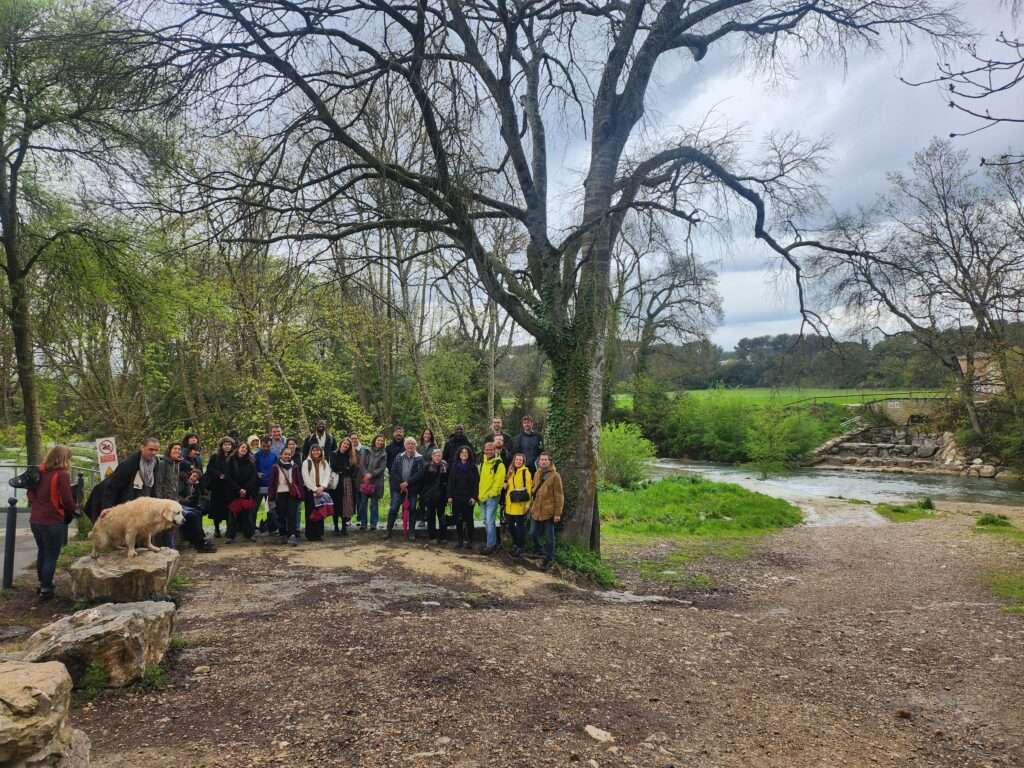
The ExposUM Institute, in collaboration with the Center for Land Policy, organized the fifth edition of the Campus Anthropocene/Spring School experimental educational program“Healthy Territories”from March 31 to April 4, 2025.
About 60 researchers and civil society representatives (elected officials, technical staff, students, nonprofit organizations, and artists) worked together in the Montpellier area to examine the livability of local communities. How can people live healthy lives in this region in the face of challenges related to urban expansion and environmental conservation, against the backdrop of climate change and pressure on local resources (water, air, soil)?
As part of this program, we explored the question: How can we live healthy lives in the Anthropocene in the Montpellier area?
And, more specifically, to focus on issues related to:
- water and rivers(water resources, water quality),
- nature-based solutions to address climate change and associated vector-borne risks(greening to combat urban heat islands, tiger mosquitoes, and infectious diseases, etc.)
- relationships between humans and non-humans(wild animals and invasive alien species, and associated health risks) within a One Health framework.

Click here to learn more about this school-community
Download the full report on the Montpellier 2025 Regional School
6. Regional Initiatives: Support for Science-Society Projects
Support for Two Regional Initiatives for the Year 2024
Mobi’Tiques Action Research Project on the Prevention of Tick-Borne Diseases
ExposUM supports the Mobitique project. The Interfaces team organized, hosted, and facilitated five 3-hour workshops bringing together researchers in tick ecology (Vectopôle Sud), researchers in the humanities and social sciences (education, social psychology), representatives from the ARS (vector control), associations (CTIQUE, Graine Occitanie), and a representative of livestock farmers (director of the Groupement de Défense Sanitaire Occitanie). This pilot project is designed in line with the goals of Occitanie’s Regional Health and Environment Plan 4.
This incubation process led to an action plan for 2025, spearheaded by the environmental education association Le Graine. This project aims to develop and implement educational initiatives designed to increase citizen engagement with tick-related risks in their local communities, as well as to test one or more scientific research questions in the field of sociology. The goal is to foster growing citizen engagement while scientifically measuring and evaluating the impact of public awareness campaigns on behavioral changes through a dedicated research protocol.
The Initiative on Citizen-Led Institutes for Pollution Awareness: Support for the Aude Institute
The Eco-Citizen Institute for Pollution Monitoring in the Aude received support from ExposUM in 2024. This institute was inspired by the Ecocitoyen Institute for Pollution Research in Fos-sur-Mer, which, since the 2010s, has brought together academics and local residents who work together to conduct research addressing questions about the long-term consequences of rapid industrialization that began in the late 1960s and has been regularly reignited. These institutes promote the integration of different fields of knowledge—particularly in the area of environmental health—and serve as regional initiatives capable of fostering the implementation of preventive measures in environmental health, as part of a broader transformation of regional dynamics.
Social science training courses were offered to volunteers in the Aude department. The courses areavailable online.
A festival was organized in November 2024 to help residents of the Aude region learn about the critical environmental health issues in their area in a fun and engaging way. The festival brought together experts, activists, scientists, and artists to offer a rich and informative experience.
Support for Two Regional Initiatives for the Year 2025
Two projects have received funding from ExposUM for the year 2025
The Rivière project, “Infectious Risks in the City: Applied Health Ecology of Interactions Between Nutrias and Humans,” studies human-nutria interactions in the Lez River basin and focuses on the health risks associated with leptospirosis, a zoonotic disease transmitted by these rodents. The project employs an interdisciplinary and transdisciplinary approach to assess these risks.
The Vaxinter projectexamines how to integrate different disciplines to address the questions raised by vaccination at the intersection of science and society. This project involves two researchers in the humanities and social sciences to foster a dialogue between the biomedical sciences and the humanities and social sciences. A study will be conducted in experimental economics to explore the impact of media coverage and vaccination on healthcare workers. Research will be carried out in communication sciences to strengthen the ties between science and the public.
7. Mediation Efforts
The Interfaces team participates in and organizes public events such as the Science Festival, the Nature Festival, and science outreach festivals.