M2 Internship Opportunity 2026 – Interfaces Track
Hosting an M2 intern within the ExposUM 2026 Interfaces research area
Internship Title
The Politicization of Health and Environmental Issues: An Analysis of the Content of the “Interfaces” Program (seminars, regional projects, school-community partnerships) at the ExposUM Institute, University of Montpellier.
Background
The “Interfaces” research area at the ExposUM Institute aims to strengthen research at the intersection of science and society, with a focus on the “exposome” (the totality of environmental and social exposures throughout life that influence human health).
The material to be analyzed during the internship stems from the activities carried out by the Interfaces research area:
- An ongoing seminar series—whose sessions were filmed and recorded—exploring the concept of the exposome and the inter- and transdisciplinary dynamics of health-environment issues (featuring speakers from the fields of health geography, philosophy, sociology of health, communication sciences, history of health, eco-citizen organizations, etc.). All sessions are available here: https://www.canal-u.tv/chaines/msh-sud/l-axe-interfaces-de-l-institut-exposum
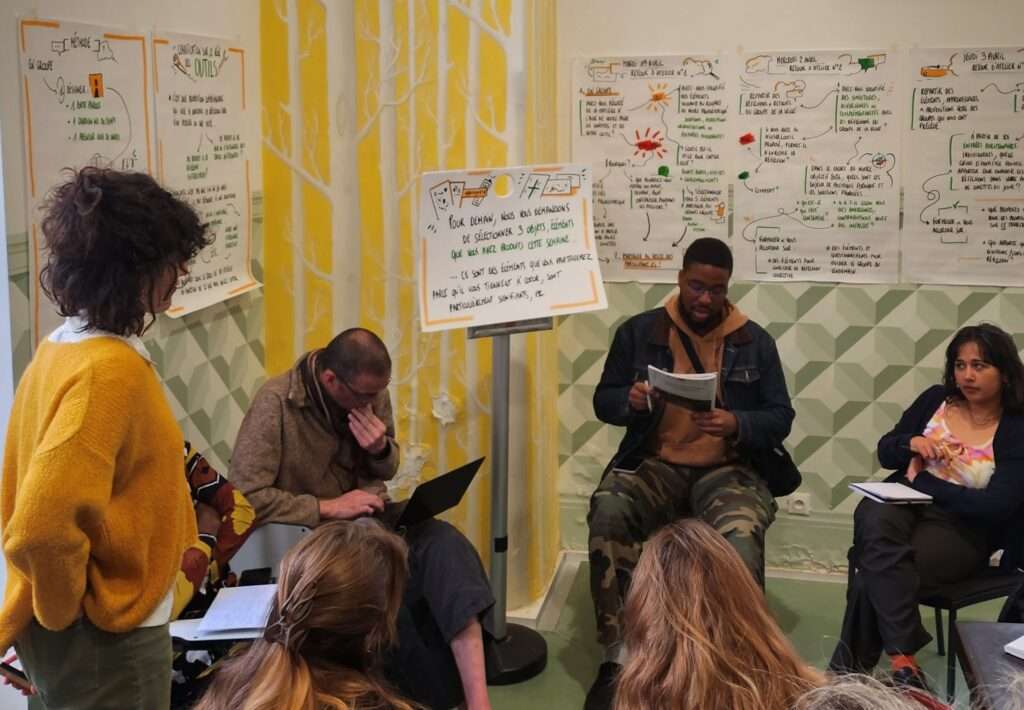
- A report on a “school-territory” initiative for transdisciplinary learning about health and environmental issues, which took place in Montpellier in April 2025 and brought together researchers, students, elected officials, administrators, and community organizations. The next edition is scheduled to take place in Liège, and the Interface research group will be involved in co-organizing the event; the intern will be invited to participate. A scientific article has also been published.
- The report on the meetings of the Montpellier Observatory on Ecology and Health Evolution (OMEES), in which the Interface research track is involved, was established in 2023 by the City and the Montpellier Metropolitan Area to bring local governments and research organizations closer together and strengthen a health-environment policy that incorporates a One Health framework. Today, OMEES brings together 150 researchers, about 50 local government officials, and an equal number of members from agencies and consulting firms.
- Reports on training workshops designed to foster dialogue among researchers, public officials, and civil society.
- Interviews with researchers involved in dynamics at the intersection of science and politics
- Patrick Allard, a toxicology researcher at UCLA (California) studying pesticide regulations from March through May 2026, is a guest researcher at the Interfaces research group as part of a Fulbright fellowship
- Anita Hardon, a researcher in socio-anthropology at Wageningen University (Netherlands) whose work focuses on the concept of the anthroposome in polluted urban contexts, is a fellow at the ExposUM Institute
- Researchers funded by ExposUM, particularly those involved in regional projects (vaccination, tick-borne diseases, urban wildlife, the Eco-Citizen Institute)
- The outcome of the inquiry submitted by Covars to the ExposUM Institute
This workshop aims to clarify how the ExposUM Institute can contribute to public debates, collective action, and public policy at the intersection of health and the environment within a transdisciplinary framework.
Course Objectives
- Map and analyze the content produced by the “Interfaces” research track (seminar materials, regional project reports, school-region fact sheets, etc.).
- Identify the dynamics at the interface between research, society, and public and private stakeholders in the initiatives undertaken: methods, obstacles, drivers, and best practices.
- Examine how the initiative facilitates the transfer of research findings to local stakeholders and the translation of research requests from the social sector
- Examine the connections between stakeholders in academia and local governments, and analyze the stakeholders, agencies, and missing levers.
- Produce an analysis report (and, if applicable, a presentation or promotional article) that proposes:
- types of content/actions
- ways to improve the science-policy interface in this type of initiative and understand the barriers and enablers
- recommendations for promoting content, disseminating it to local stakeholders, and fostering cross-disciplinary synergies
- (Optional) Co-design or contribute to a promotional resource (e.g., infographic, “lessons learned” sheet, mini-webinar) intended for non-academic partners.
Responsibilities and Tasks of the Intern
- Overview of the activities of the “Interfaces” research area: seminars, regional projects, and school-community partnerships.
- Collection of available documents and materials (seminar minutes, videos, project reports, action sheets, website).
- Qualitative content analysis: topics covered, types of stakeholders involved, modes of interaction (researchers/public sector stakeholders/civil society), territorialization, interdisciplinarity.
- Drafting a structured report, including recommendations.
- Interim presentation of the initial analyses to the research team.
- Participation in workshops, meetings, and seminars organized by the Interfaces research area (e.g., ongoing seminar series) for field observation and data collection.
- (Optional) Development of promotional materials (infographics, summaries for a non-academic audience, educational handouts) to be shared on the website or at an event.
Desired Qualifications
- Master’s 2 student in Political Science, Sociology, Environmental Humanities, Sustainability Sciences, Geography, etc., with an interest in health and the environment, territorial governance, interdisciplinarity, the research-society interface, and post-normal science.
- A solid background in public policy (health, environment), action research, and transdisciplinarity.
- Ability to analyze content (qualitative and quantitative), methodological rigor.
- Proficiency in office software (Word/LibreOffice, Excel/LibreOffice Calc) and, ideally, qualitative data analysis software (e.g., MaxQDA, Whisper).
- Good written and oral communication skills in French (and preferably in English).
- Independence, curiosity, initiative, and the ability to work as part of a team.
- Available in the city of Montpellier.
Practical Details
- Location: the “Interfaces” research group’s offices at the ExposUM Institute, part of the Eco-Health cluster at the Maison des Sciences et des Humanités SUD (MSH SUD), University of Montpellier.
- Duration: to be determined (4 to 6 months, depending on the Master's program requirements).
- Primary contacts: Aurélie Binot and Mariline Poupaud.
- Start date: To be determined between January and March 2026.
- Compensation: as specified in the current internship agreement.
Expected Results
- A report of approximately 30–40 pages (or equivalent) presenting the analyses, classifications, and recommendations.
- A promotional material for the general public or for partners (infographic, fact sheet, etc.).
- An oral presentation (30–45 min) to the “Interfaces” research group and key partners.
- (Optional) Proposal for a line of research or action to be pursued by the research area following the internship (publication, regional project, seminar).
Benefits for Students
- Direct experience working at a research institute focused on health and environmental issues, at the intersection of science and society.
- Real-world scenario involving content analysis and promotion.
- Development of skills in territorial governance, interdisciplinarity, public policy, and action research.
- Opportunities for networking with representatives from the research community, civil society, and local governments.
- Highlight on your resume for a career in research, local government, or health and environmental institutions.
For applications or inquiries
- For any inquiries: Mariline.poupaud@umontpellier.fr
- If you would like to apply, please send your resume and a one-page cover letter to the same address by December 7, 2025.