The ExposUM Institute Welcomes Patrick Allard – Workshop on April 27
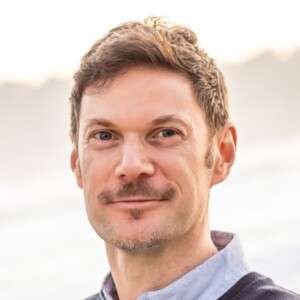
The ExposUM Institute is pleased to welcome Patrick Allard from March1 through May 31 as part of a Fulbright Fellowship (Franco-American Commission), for which he is a recipient. A toxicology researcher at the University of California, Los Angeles, Patrick Allard works at the intersection of genetics, developmental biology, and environmental health.
During his stay, he will focus in particular on public policies regarding pesticides. He will work collaboratively on his REVEAL project. By focusing on pesticide use in agriculture, the project aims to highlight how the interaction between community, scientific, and regulatory structures leads to inadequate environmental policies that fail to protect and care for their own populations and ecosystems. The project aims to propose ways to address gaps in environmental governance that lead to environmental inequalities.
You can watch a recording of his presentation at an ExposUM seminar here.
Several meetings with the ExposUM project teams and partners are scheduled during his stay.
Save the date : Special Workshop on April 27 – From Research to Public Policy Decisions
Recording of the session
📅Monday, April 27, from 9:00 a.m. to 12:30 p.m.📍
📍At the Maison des Sciences et des Humanités, 71 Rue du Professeur Henri Serre; tram: Albert Premier stop, Line 1 or Line 5
- Registration link (free but required)
A workshop is being offered on the topic “From Research to Public Policy”
At this workshop, meet Patrick Allard (University of California), a toxicology researcher who serves on California’s Toxic Substances Control Board. His dual role as a researcher and regulator allows him to provide concrete insights into how science can shape public policy on environmental health.
We will also have the opportunity to hear from Christelle Gramaglia, a researcher at UMR G-EAU, and Viviane Thivent, directorof IECSEA, both of whom are actively involved inthe Aude Ecocitoyen Institute for Environmental Health. In particular, they will discuss their projects “participatory pollution inventory” and “pollution in gardens.” This citizen-led approach to monitoring and advocacy embodies another possible aspect of the “science-policy” interface.
How can your research influence public policy?
During this workshop, you will gain comparative insights into approaches to the science-policy interface at the local, national, and global levels, as well as across several sectors (environment, health, food). In the second part of the workshop, we will guide you through a reflection session to help you develop this aspect in your projects.
On the agenda:
- Lessons Learned: How Can We Effectively Influence Public Policy?
- Hands-On Workshop: Incorporating the Science-and-Decision Dimension into YOUR Projects
- Montpellier Process Partnership: Local, National, and Global Perspectives
- Toolkit: Contacts, Methodologies, Templates
This is particularly relevant if: You work on environmental pollutants, endocrine disruptors, or public health, or if you want to make your research actionable for policymakers.
We will offer a tailored approach based on the current stage of your project:
- Project Completion: How to Capitalize on and Communicate Your Results to Decision-Makers
- Midway Through the Project: How to Adjust Your Project to Increase Its Impact on Decision-Making
- Project Launch: How to Integrate the Science-Decision Dimension Right Now
A unique program, practical advice, and hands-on work on YOUR projects.