Nexus EXPO-PMT Project Plenary Meeting
On Thursday, June 11, the research teams and all of the Expo-PMT project partners met to discuss the progress made on the three dissertations that make up this research program.
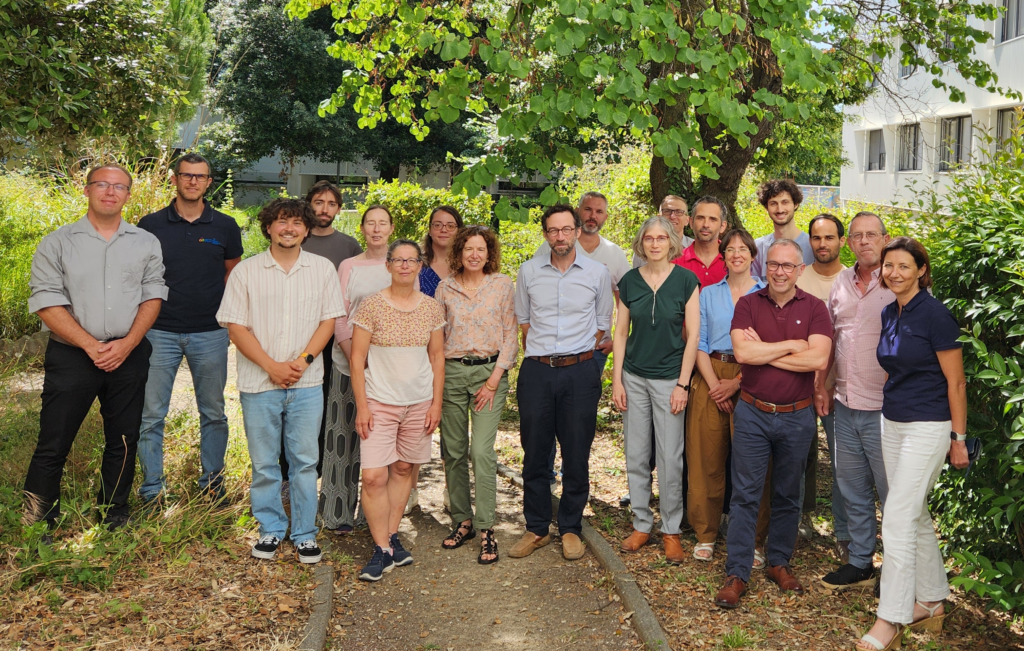
Stakeholders involved in the Nexus EXPO-PMt at the plenary meeting on May 11, 2026
The Nexus Expo-PMT: A Transdisciplinary Project Dedicated to Water Quality
EXPO-PMT is a research project within the ExposUM Nexus initiative: it is structured around three doctoral dissertations, each led by a doctoral student from a different discipline and institution. This approach provides complementary perspectives on a single issue—in this case, the study of emerging pollutants known as PMTs (Persistent, Mobile, and Toxic) present in water intended for human consumption. This topic is addressed through three complementary areas of research:
- The development of methods for identifying PMTs in water resources and the evaluation of the effectiveness of treatment processes currently used in drinking water treatment systems.
> Dissertation by Martin Gabard – UMR IEM and HSM - Modeling the toxicological impacts of PMTs in drinking water on human health.
> Dissertation by Matéo Melki – UMR LBE - Developing decision-support strategies for water service managers to better address these emerging pollutants.
> Antoine Meyer’s dissertation – UMR G-EAU
A meeting to share progress and foster discussion
This transdisciplinary project focused on a specific topic brings together numerous partners with complementary expertise and initiatives. EXPO-PMT specifically includes the Montpellier Méditerranée Métropole Water Authority, BRL Exploitation, the consulting firm Espelia, and the Rhône-Méditerranée-Corse Water Agency.
The plenary meeting held on Thursday, June 11, brought together all the stakeholders involved. After Catherine Faur, coordinator of EXPO-PMT, provided an overview of the research project’s context, each of the three doctoral students presented the progress made in their work . These presentations sparked rich and constructive discussions.
Held every six months, these progress meetings are key milestones in the project’s timeline. They provide an opportunity to monitor the progress of the work being carried out and to foster dialogue between researchers and partner organizations working in the field.